

In a world of ever-evolving architecture, courtyard houses remain timeless symbols of harmony between nature, culture, and design. These houses breathe with their hearts into living centres that are open, well-balanced and bring together man, light and air. Based on tradition but transformed by modern design, houses with courtyards nowadays can be viewed as a lesson in the eternal principles of sustainable living.
Savita Vadi, Vadodara – A Chettinad Heritage in a New Form.
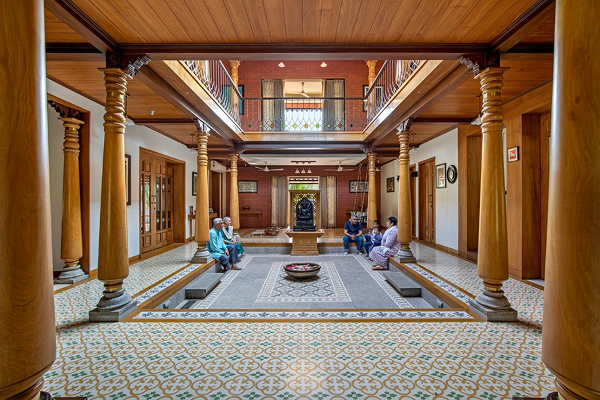
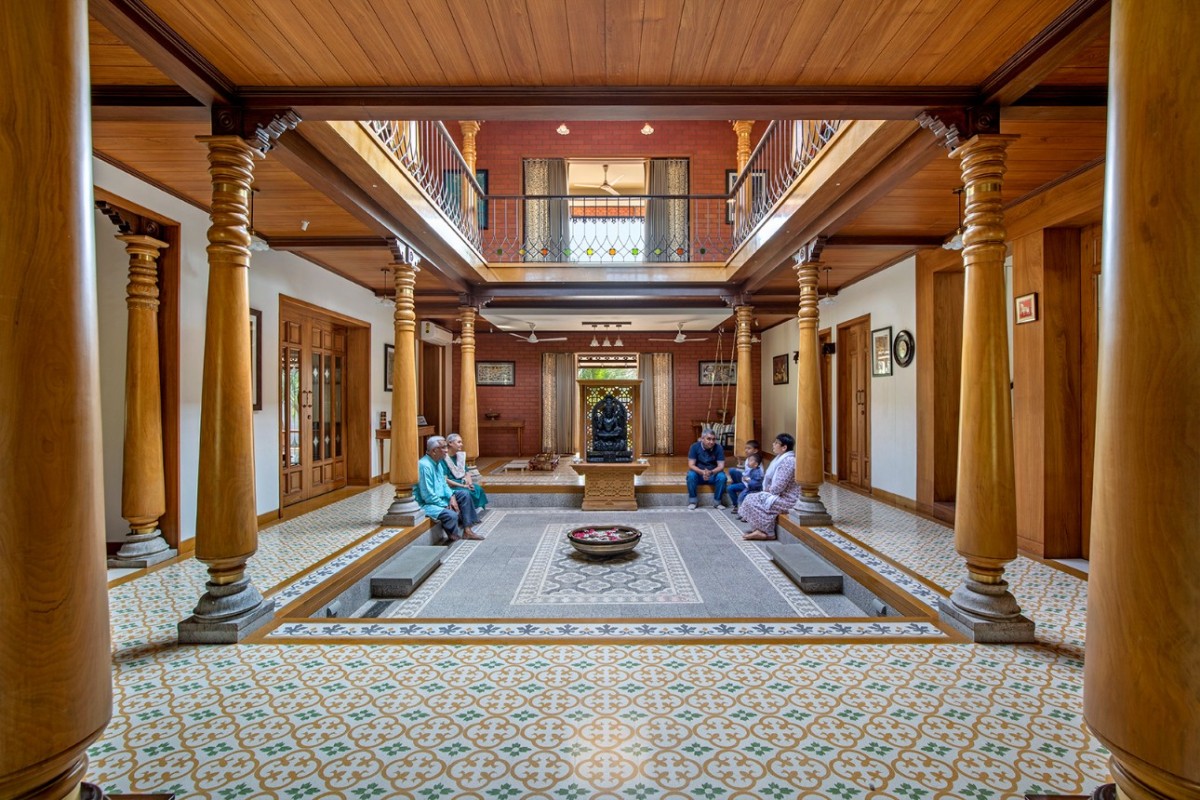
It is a magnificent tribute to the Chettinad custom, situated in peaceful rural surroundings near Vadodara. It is constructed as a retreat of delicate craft and has carved wooden columns, colourful Athangudi tiles, and stone jaalis, both forming exquisite filtered light and shaded areas. The open-to-sky yard is also central to the whole home, which unites the rooms but provides privacy. The house marries Vaastu, local materials and small stained glass skylights and provides a colourful but peaceful home.
Renuka, Bengaluru – fusion of North and South.
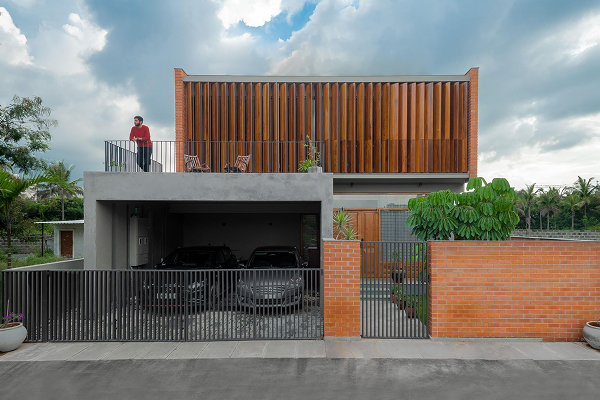
This residence is a celebration of the cultural exchange of the north and the south of India via construction. The main elements of the courtyard are the central temple tree and the open corridors designed with the typical wooden elements and accents resembling embroidery. It is open-minded in the way that it promotes natural ventilation and light, and strengthens its connection with nature and spirituality.
The family and community Courtyard House, Bhilai.
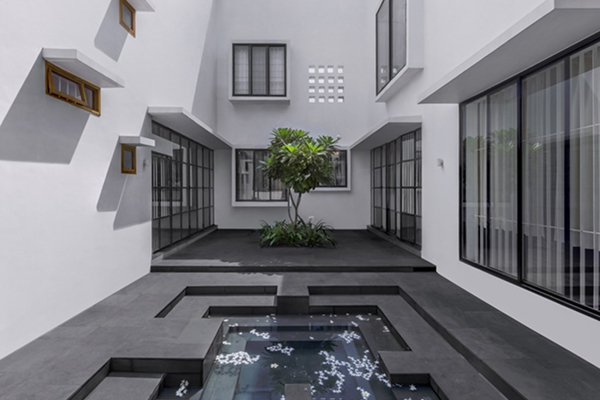
This house is a rare form of twin home consisting of two families that are connected through a central water feature courtyard which is designed after the traditional stepwells. It incorporates cooling passive architecture with social integration so as to facilitate communal living with consideration to personal privacy.
Colonial Revival, Tamil Nadu – Longing But Modern.
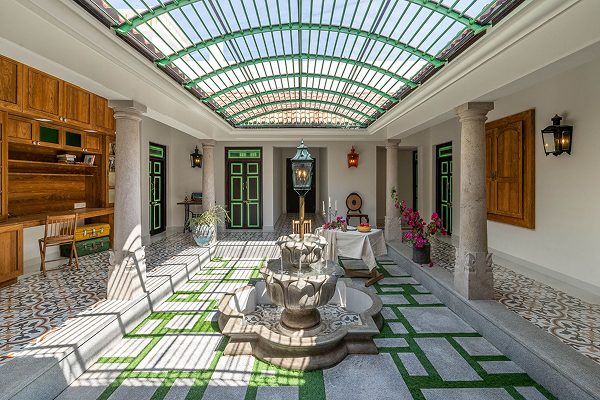
Such a pastel-coloured house resurrects the colonial-era and local Karaikudi architecture with a central courtyard furnished with a water fountain and stone flooring. It is cross-ventilated and light-designed, and it strikes a balance between heritage and modern ecological philosophy.
Karbala, Kuvathur – Coastal Eco-Regionalism.
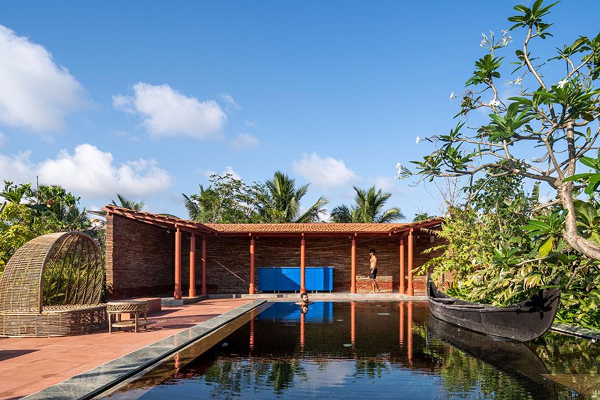
This four-family coastal house is made with repurposed materials and local scenery and is a self-sustaining retreat. Its large courtyard is an environment that supports plant growth, socialising, and the movements of natural air to the environment, which is a poetic matter of community, culture, and climate adaptation.

The reason why the courtyard houses are eternal.
The concept of the courtyard space incorporates the elements of nature, such as sun, wind, and greenery, among others, to produce healthy, radiant, and inviting homes. The spaces are emotionally and socially healthy, beyond just physical comfort, and are families on place and tradition. Their eco-friendly design ethics still influence architects, and it proves that eco-friendliness is not only in the form but also in the attitude towards climate, culture, and human connection.